Showing posts with label Clusterfuck. Show all posts

Thursday, March 6, 2014

Slumlords

(Please note that this post is the intellectual chassis for some other work.)

Philadelinquency recently ran an excellent piece on how Philadelphia’s very poor school performance holds it back. Setting aside the chicken-and-egg problem of schools and class, let us focus on the final element in this piece, an element that ties back into the blog’s long-standing focus:


Now, about your suburban slumlord who smells the gentrification coming towards his rental property he was renting out for $600/mo and collecting a string of code violations on for a decade who might decide to sell his house to a rehabber and cash out, leaving that rental at the sake of increasing valuations?  Nobody has come up with a solution for that yet.


While this is a tie-in to pieces such as this and this, there is a more fundamental problem it touches on that needs addressing: Our zoning policy has been an abysmal failure at regulating landlords. Worse still, in its zeal to separate out homeowner and renter communities, it has resulted in a nasty unintended consequence: Slumlords are the result of the system.


Consider it for a moment. Time and again, sociological studies have shown that a landlord’s investment in his rental properties is directly tied to his geographical proximity to them. A landlord who lives in the same city is more inclined to invest in his properties than one who does not; in the same neighborhood, even more so; on the same block, ditto; and by far the most likely on premises. Since a slumlord is a landlord who fails to invest in their property, we can extrapolate that they are inversely correlated with distance: that is, the closer to their properties landlords live, the less likely they are to be slumlords. We can thus extrapolate that landlords of city property who live in the exurbs are likely to be slumlords; those who live in a different metro area entirely even more so. And guess what--they are!


It is not by accident that Philadelinquency spends most of its time chasing paper trails on slumlords who live far from the city. And in many cities, “institutional investors” are quite clearly slumlords-in-waiting.


But our claim, that institutional slumlords are an unintended consequence of our land-use policy, goes quite a bit further. To make this argument, let us recall how modern zoning came to be (see here, here, and here); they were implemented precisely because the homeowners of an affluent Cleveland suburb sought to keep renters out. And so it is unsurprising that modern zoning policy disenfranchises renters; what is a bit more surprising is that the jurisprudence required to get around earlier rulings also disenfranchise small landlords. And much as other side effects of “sorting” by use disenfranchised small businesses--to the benefit of larger malls, hypermarkets, and big boxes--so too has it benefited property management firms, and institutional investors.


Property management firms--companies of the type that run garden apartments--have full-time maintenance staff associated with each property. (In the absence of a landlord, a caretaker is the next best thing.) But institutional investors need not; all they need to maintain is the portfolio. Part of this is the--not unreasonable--justification that since they handle smaller properties (i.e. houses) than property managers, a caretaker per property would be excessive. But another part is that these organizations usually have a strong financial focus, often to the detriment to the properties they’re supposed to be managing. And of course, you also have bona fide slumlords who hide behind “institutional investor” masks.


Indeed, the whole system of institutional investing seems set up to encourage financialization and transactions at the expense of property maintenance. Is it any surprise, then, that to many people, “rentals” has become a dogwhistle for “slums”? Or that small rental properties are reflexively opposed, for the same reason development is in general?


One could say that the irony is that the system has come to disadvantage the small landlord, the homeowner who wants to add a granny flat above his garage, the community-minded owner who wants to fix that house up down the street and rent it out to a nice family, in favor of the institutional investor with Wall Street connections and falling-down flats. But that is just one irony buried in a whole system of deeper ironies. Perhaps it’s time to stand up and take notice.

Wednesday, February 26, 2014

Whelp, We're Boned

From this article: http://america.aljazeera.com/opinions/2014/2/corporate-welfaresubsidiesboeingalcoa.html
The size and range of the subsidies the tool has uncovered helps explain the burdens taxpayers must bear because so many major corporations rely on welfare for much or all of their profits rather than earning them.
Holy fuuuuuuuuuuck...

If we, the taxpayers, are subsidizing their profits, doesn't that imply that we live in a right-wing socialism?
ETA: Thank God we've got a gubernatorial candidate who gets it, and gets that the only way to win this game (thank you Jon Geeting for calling it the "Ripoff Game") is not to play and play the Economic Gardening* game instead:
Tom Wolf’s Fresh Start plan has a different idea that’s not based on blowing a bunch of money on propping up zombie firms. He wants to invest in Ben Franklin Tech Partners and other regional incubators that have a proven track record of creating new Pennsylvania businesses, and commercializing the good ideas coming out of our many universities into working business models.

This is a slower process than the Ripoff Game, but it actually creates new value, and it’s actually sustainable in the long run. This would be the benefit of having a self-funder Governor. Unlike Tom Corbett, he wouldn’t try to bet the horse on stupid get-rich-quick schemes conveniently timed to the election calendar.
(Keystone Politics)
_____________________
*Would you believe there is no Wikipedia page for economic gardening? Now that's ridiculous...

Friday, February 21, 2014

Macro Mistakes

Like any good dogmatist, Hayek recently disparaged Keynes. Yet he without sin casts the first stone: perhaps he should try and clean his own house first. It was precisely those qualities Hayek disparaged Keynes for that made Keynes a good economist.

The fact of the matter is that economics as a discipline has advanced little since Smith's The Wealth of Nations, and the person who singlehandedly offered the most advancement was, in fact, Keynes. This is not to say he was all right--indeed, as Jane Jacobs points out, Keynesianism's  principal quantitative instrument, the Phillips curve, had begun to fail as early as 1967,* and his economic corpus left no theory adequately explaining the onset of stagflation a decade thereafter. But when Keynes, a trained mathematician, turned his eye to economics, the field had already rotted away from a century or more of disciplinary decadence, laid bare by the Great Depression's onset. In short, Keynes was a talent in one field who turned his attention to an adjacent one--the paragon of an innovator.

This is not to defend post-1970s neo-Keynesians. Despite the volley between them, the Austrians, and the latter's successor neoclassicals, none of them have offered any real solutions, and all of them have offered a mix of rehashed masters' theories, bullshit, and (in very rare moments of clarity) insights. Nor has the neoclassical's fixation on mathematical modeling helped: many of their "sophisticated" models are actually very elementary, almost childish, applications of iterated operations. And anyway, a model is like a program, and as the programmers like to say, "Garbage in, garbage out".

Perhaps nuggets of wisdom can be found in neoclassicals' pesudomathematical clutter, but so much of the discipline is fundamentally deficient that no matter how mathematically accurate the models may be, they will never return anything more than garbage. Something is rotten in the state of Denmark. Stagflation laid this bare; it was papered over; 2008 laid it bare again. Jacobs offered the single most accurate critique of the economics of her day in 1984; for a generation, it has been ignored. But sooner or later, the reckoning must come, and when it does, I hope that the offer below does some good.

Some Major Fallacies and Other Rational Lapses

Hayek's Fallacy. This one is named after Friedrich Hayek, doyen of the Austrian School. Hayek is credited for several important insights--but this fallacy is closely tied to his realization that economics is both a complex and self-organizing system. More a philosopher at heart, Hayek found himself without the wherewithal to deal with the problems at hand, and much of his work is thus a demonstration of the limits of qualitative analysis in economics. But the real issue comes--and this is why the neoclassicals break from the Austrian School--when Hayek, whose work lies at the very edge of qualitative reasoning's capabilities, becomes suspicious of those attempting to find and apply mathematical instruments to the problems at hand.

Basically, Hayek's Fallacy amounts to an economist (or a scientist of any sort) doing one of two things: either (a) throwing one's hands up in the air and saying "I give up!" when faced with the understanding that a system is too complex to easily be soluble (or at least tamable), and/or (b) embracing that complexity as a thing-in-itself instead of further teasing it apart, finding the internal feedbacks, etc.

For example, a thinker, when faced with the realization that System A is a integrated dynamic agglutinated supersystem over System B, engages in Hayek's Fallacy if he fails to further attempt to find the underlying integrations and agglutinations, or tease apart its dynamics. In rhetoric, Hayek's Fallacy can function as a call-to-arms, a statement that a problem is too big for one mind to solve; it, however, has no place in academic literature.

Smith's Mistake, or, The Anthropological Fallacy. This is the fallacious conflation of nation and state in economic literature. Recall that the definition of a nation is "a people, race, or tribe; those having the same descent, language, and history," whereas a state, in all of its forms, is simply a statement of political sovereignty.

As Jacobs put it, "[Smith] accepted without comment the mercantilist tautology that nations are the salient entities for understanding the structure of economic life"**. But this very tautology is a confusion between "nation" and "state", brought about by a misreading of the special case of Enlightenment Europe. She herself sidesteps this issue: nation in Cities and the Wealth of Nations is actually used in contexts that imply "state" (as it is in Smith's work), and is indeed often paired with "sovereignty".

This confusion has never adequately been addressed in the literature, which is a shame really, because The Wealth of Nations is actually exactly what it says on the tin ... at least until Smith starts discussing issues that apply to the state, not the nation. But the sovereign macroeconomics*** it supports is thus, by definition, a very small subclass of sovereignties--nation-states.

How many of them can you name? In fact, even some of the strongest candidates for nation-statehood, like France, constitute cultural empires^: France includes France proper, Brittany, Languedoc except for the part of Savoy that ended up in Italy, about half the Basque Country, part of the Rhineland aka Alsace, and possibly a little tiny part of Catalonia that ended up on the wrong side of the Pyrenées. About half Germany's Länder are little tiny nation-statelets. Ignoring Northern Ireland, the UK has about half a dozen nations: Scotland, Wales, Cornwall, the Isle of Man, and at least two distinct Englands. Spain includes the nations of Aragon, Andalusia, Castile, Catalonia, Galicia (which is really a northern extension of Portugal), and the other half of Basque Country. Venice, Milan, Genoa, Florence, Rome, Naples, and Palermo are all culturally very different places, anchoring very different places. And so on. So even on a continent where the political boundaries come closest to matching nation-states, they rarely ever are. What do you think this implies for truly large states?

The Energy Golden Calf. A faulty premise underlying a great deal of modern macroeconomics. It is often claimed that, due to the advancement of our economy, energy inputs have decoupled. Not just utter bullshit--the fact that energy crises can be shown to underlie both the 1970s and 2008 recessions alone should tell us as much--but dangerously ethnocentric, to boot.

Funny Money. This is the idea that modern monetary theory (much of it based on fiat currency) has solved everything. In reality, it ignores the underlying problem--limits to growth, particularly viz. debt's role in demanding growth--and allows us to, instead of solving these very real problems, paper them over with nice-sounding bullshit like the Energy Golden Calf or the idea that Bakken and Eagle Ford will make us energy-independent.

While gold bugs are mistaken in holding a metal's value sacrosanct (the natural conclusion of this post is that there is a very real natural money base, and it ain't metal), the fact that they dare question Funny Money dogma--one that especially pervades finance--deserves some credit in and of itself.

Politics Overassignment. An outgrowth of the failure to fix Smith's Mistake, the belief that the sovereign state is the arbiter of macroeconomics often leads economists of all types to assign outsize roles to these entities' politics. But the point of Smith's Mistake is that the sovereign state is not macroeconomics' arbiter! Why, then, should its politics be anything but tangential to (if not a derivative of) its economic well-being?

I have a "razor", a corollary of this mistake. In any given explanation of an economic phenomenon, the one that utilizes politics the least is usually the correct one.

Major Unaddressed Problems

The Growth Problem. Nearly everything in economics is predicated on infinite growth. As any hard scientist will tell you, however, nothing is. This core problem, ignored in most schools of thought, and aggressively denied and papered over in the few that even consider it, refers to the need to reconcile economic health and well-being with an environment that is less than tolerant of infinite growth. This issue manifests in several tight-knit issues:
  • The Debt Problem. A simple explanation of debt is a good advanced now, paid back later. It, in other words, adds a temporal element, a half a dimension, to the system. The problem is that, in the financial system that has supported the industrial economy, debt is advanced only with interest: Not just an advance in the now, but pay back with a little extra later. Growth is required to pay that little extra--or--Interest demands growth. But since it is precisely this interest which grows the money supply, this implies that Money demands growth. The inescapable conclusion of this is that due to its debt-and-interest foundation, money is not resilient to a lack of growth, and hence unsustainable. But debt is required in any healthy economy, growth or not! This in turn demands that (a) the money base be removed from the debt base, and (b) the debt base managed so that it does not overshoot its limits. Current economic theory is blind on the latter--infinite growth is orthodoxy--and hence fails to understand the underlying issues that enforce the former.
  • The Energy Problem. Energy is the key economic input. Without energy, an economy can't function. While the Energy Golden Calf and Funny Money chronicle the fallacious attempt at decoupling it, it is a certainty that a world with limits is going to have to deal with the this issue sooner or later.
  • The Economic Health Problem. If a healthy economy is predicated on infinite growth, how can one with no growth be achieved? And second, if it is possible to have a healthy economy without meaningful growth, how would it have the most equitable distribution of goods?
The Imperial Problem. Pursuant to Smith's Mistake and its attendant Politics Overassignment, the dominant issue in the branch of macroeconomics that focuses on states--sovereign macroeconomics***. While urban, regional, and national economics are relatively well explained, Smith's Mistake has left a key problem with moving from a national level to a state one unanswered. This problem is: How do imperial economies actually behave? For sovereign macroeconomics to have any real meaning, and any real policy input, answering this question is key, as nearly every sovereign entity is an empire^, and while Jacobs offers significant explanatory inroads, her city-and-region focus would need to be scaled up to find relevant causal and feedback relationships.

The National Problem. The second largest outstanding problem in sovereign macroeconomics. Briefly stated: Stripping away statist elements, Smith's is an excellent account of the economies of nations; Jacobs complements that with one of cities and regions. It appears fairly evident that a nation without economic centralization--that is, a single major economic hub aka a large city--is a bypassed place^^--but this demands the questions: If cities and regions, and nations are both well-described, then how exactly does a city and region economy give rise to a national one? And if bypassed places are nations that never developed cities, what causes the catalyzing feedback to fail?

The Markets Problem. The role of the market is paramount in economics. Economists of various schools assign various values to this role, but they all assign a value to it. But it can clearly be seen that, while the market provides for the optimal allocation of resources in most instances, it fails to in at least two types of (related) cases: the tragedy of the commons, and Braess's Paradox. Both of these involve optimal decisions at the individual level--the level of markets--resulting in suboptimal outcomes at the communal level--the level of government. Thus it can be seen that, contra certain schools of economic thought, markets can and often do fail as optimizing mechanisms. The problem is hence: Can we identify which venues markets fail to optimize for? If so, are optimal solutions understood? Can we implement optimal solutions (e.g. with policy)? and finally, Can we build an economic theory that accounts for both when markets are successful and when they are failures? Understanding markets limits is the heart of the Markets Problem^^^.

Conclusion

Between the plethora of lapses in thought and problems blinkered dogma leaves unpondered, is it any wonder that the field of economics is becoming ever more marginalized, much of its previous sway now being intruded on by mathematicians whose models are orders of magnitude more sophisticated, or by finance majors handling Wall Street administration? The field is a flailing colossus, its own extreme disciplinary decadence eating away at it from the inside, its fortified silos and walls refracting fresh innovations and insights from the outside like so much enemy artillery.

Despite its PR'd veneer, its inside has become laughable, worse than pseudoscience--a series of entrenched, never-changing dogmatic positions sniping away at each other and disregarding any fresh insight any Other has to offer. It calling itself the "hardest" soft science is worse than a bad joke: The tripe coming out of economics builds mental blocks against insights from other soft sciences (particularly history and anthropology) and plays an outsize role in the soft sciences' marginalization as a whole. Economics is a cancer in our midst.

And the blogosphere has laid it bare! Before, the walls of academia hid it; today, however, half the economics blogs consist of Keynesians sniping at Austrians, and the other half Austrians sniping at Keynesians, both sides regarding the other with the sort of undisguised contempt you rarely ever see outside of crusaders and jihadists (really the same thing). Then they prognosticate with pearls of wisdom from their masters, and when they invariably turn out, in some way, wrong, spin and backfill them. Blogs like Naked Capitalism and Zero Hedge are good for lots of things, but--just like their discipline--are failures in their stated purpose. It is hard to have any sort of productive discussion with economists, or even economics attachés, when the discipline's core is so riddled with errors, and the practitioners so inflexibly defensive, that gentle prodding only ever yields being shouted out.

Is it any wonder I find engineering more accessible?
___________________
*Cities and the Wealth of Nations, Ch. 1, pp. 17-20.

**ibid., Ch. 2, p. 50.

***That is, macroeconomics at the sovereign-state level.

^Here I am using a very "tight" definition, where an empire means any state that encompasses two or more whole nations. States we often think of as empires can be thought of as large empires, with ten or more constituent nations. The United States, for example, has about a dozen major nations.

By the way, Europe isn't devoid of nation-states. Off the top of my head: Austria, Slovakia, Hungary, the Czech Republic, the Netherlands and Baltic States, Finland, Scandinavia, Iceland, Portugal, and Malta are all, for all intents and purposes, nation-states.

^^ibid., Ch. 9, pp. 124-34.

^^^I'd like to further note that solving the Markets Problem might be the single most important contribution economics has to adapting to a world without limits. Growth dogma assumes there is always more out there, but as is regularly pointed out, this is fallacy. Instead a real solution of the Markets Problem would (should) entail a solution to this question: How do we tap common resources in such a way that we always leave an adequate amount for those who follow? Back at the dawn of the Industrial Revolution, such a question would have been nonsensical; today, it's a requirement.

Wednesday, February 5, 2014

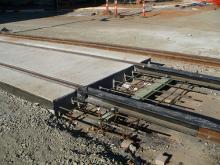
No Girder Rail Is Made In America Whatsoever

Yep, this is a problem for light-rail and especially streetcar projects.

(Girder rail is the best kind of rail for street running.)

In fact, there's only one producer of it in the world--in Austria.

But look on the bright side: Build enough streetcar track and you can catalyze domestic girder rail orders.

But Buy America is a major block between A and B.

Oh look--protectionism run amok undermining the development of domestic industry. Again.

Thursday, February 23, 2012

A House Divided

In the news today, SEPTA's head, Joe Casey, is blasting the House Transportation bill. The problems with this bill are well known.

Now, the bill is in one sense obvious political posturing. It is impassable in every sense of the word--no Democrat in their right mind would possible vote in favor of it. It is a transportation bill as the ultra-regressive Tea Partiers would see it. It completely ignores major changes in transportation demands occurring among younger Americans. It would benefit one constituency and one constituency only--the Tea Party's core constituency--to the exclusion of all others.

But, in another sense, it is denial. Active denial. A willing ignorance, a nostalgia that we can return to the 1950s.

The reality? We can't. The United States passed peak oil availability in 2005. Vehicle miles traveled, unsurprisingly, peaked at the same time. We just lived through one oil price shock--in 2007-8--and are ramping up to another one. This is something the new generation gets, in a very visceral sense, and whenever possible they're choosing to live where there's no need for a car to get through the day.

This is our voice, a voice missing from the Tea Party and this boondoggle bill: we want, and demand--to the point that many cities now have powerful lobbies for them--bike lanes. We prefer taking mass transit. We usually have more than one thing going on at a time, job-wise, and time is precious. Too precious to be spent driving an hour or more every day.

And those of us who have decided to learn about how our transportation system works, who want to work for it, also know that our roads far, far overbuilt relative to how much we can spend maintaining it, while everything else is utterly opposite.

We know that the only way to reduce driving is to make driving less necessary and less convenient. And so the House transportation bill is utterly antithetical to our needs.

Wednesday, January 18, 2012

In Roxborough, Will Land Use Mistakes Follow Ethics Violations?

Current "Kingsley Court" site plan
The former Ivy Ridge Personal Care Center, ground zero of a Villanova socialite’s bilking of disabled citizens to finance her lavish lifestyle, may soon be redeveloped. The atrocious treatment there only ended in 2009. Since then the site has seen multiple arson fires. It is today a blight on the neighborhood, and it will certainly be torn down.

The most advanced redevelopment plan for the site, rejected for now ... Continue reading at Hidden City Philadelphia.

Friday, December 23, 2011

Subdued Christmas in Center City

It’s Christmastime in Center City! And you would hardly know that from looking at the papers. The city’s best light shows this year, declared the Metro last week, are in Franklin Square, Chestnut Hill, and Lower Moyamensing (so spectacular it merited its own article).

But what about, y’know, Walnut Street? Or Market? Aren’t the best Christmas decorations in the city supposed to be in its commercial core? Shouldn’t they? After all, is there any better way to encourage people to buy something than to be festive about it?

So I took my camera, and I observed ... Continue reading at Hidden City Philadelphia.

Monday, December 19, 2011

When Caesar's Palace Meets Publisher's Clearing House

Photo credit: Peter Woodall
Last week, a sort of miniature gaming den tried to open on Frankford Avenue in Fishtown. This was supposedly an Internet café, but it really was a pop-up casino, offering games and cash prizes.

Thankfully, the property owner ... Continue reading at Hidden City Philadelphia.

Thursday, October 20, 2011

Fixing the FRA

Although there are a handful of trolls who believe otherwise, the consensus opinion that the regulatory body of the Federal Railroad Administration is largely, if not wholly, broken and that, as such, a radical reformation of the body--such as from a regulatory body to a booster body, or perhaps a planning body--if not its outright elimination, is needed. This opinion is shared among people with substantive transportation expertise, from hobbyists and prospective entrants (e.g. moi) into the field, to practitioners, and on up to the very freight railroads the current FRA regulations are most forgiving to. The FRA question of a decade ago may have been does it work?, but now that the answer no, it does not has been widely agreed, the question has to become how to change it?, or, more brusquely, how to fix it?

The first problem in this question is how many people even know it is a problem, outside of the community that has to deal with it regularly? Not many. The FRA is one of several sub-silos in the highly disciplinary decadent U.S. Department of Transportation; it reports to the Secretary of Transportation and displays little cross-departmental communication with its kin, the Federal Transit Administration (FTA) and Federal Highway Administration (FHWA)*. As such, it is part of the Cabinet and thus the Presidency. But compared to the EPA, which is a huge fish, and constantly bounding across the line of what constitutes 'good' and 'bad' regulation, it is insignificant unto nothing. Very few people would even realize that stripping the FRA of its regulatory power would have done something. But since the body politic the FRA puts into practice is, compared to peer agencies, such as the relevant agency in Australia (whatever it is), or the international standard of the UIC, which governs everything from the light, speedy trains of Western Europe and Japan to the massive and heavy trains of Russia and China, archaic at best and plain old atavistic at worst, the FRA is a major impediment to badly-needed change in American railroads--both in the arenas of passenger and freight.

Thus the first issue we have to deal with is outreach. And not just one type of outreach. The FRA is so broken for so many reasons--and appears to exist now merely to perpetuate itself rather than being in thrall to a corporate or labor interest--that a case for why the FRA should be stripped of its regulatory power, if not outright done away with can most likely be made to cater to every political ideology imaginable. Very few regulatory agencies get to be such total failures as to manage that. Let us now concentrate on some of the more general ones.

For Republicans. The vast majority of modern rail technology is developed overseas, in UIC-compliant situations. If you want to privatize passenger rail service, you'll need to ensure that the American rail regulatory body is equipped to handle the maximal amount of rail technologies current available. As it stands, the FRA's sacred cows guarantee it can only handle a relatively minimal amount, and little--if not none--of which can be readily used for profitable private passenger rail. To pursue a viable privatization agenda, thus, the regulatory power of the FRA must be stripped. (This should be particularly effective on Mica.)
For Democrats. Regulation needs to be revisited from time to time to test its effectiveness. Ineffective regulation is detrimental to the needs of a country as a whole (just as a lack of regulation in situations where safety is legitimately needed). By this standard, our railroad safety regulation is outdated and ineffective. The U.S. has the worst--by a long shot--per capita railroad crash fatality rate in the developed world, despite a regulatory agenda supposedly engineered to ensure safety. Furthermore, the entire field of railroad technology in the U.S. is relatively outdated and falling behind, with offerings by Bombardier, Alstom, Siemens, and Kawasaki outstripping what even the GE GEVO is capable of, much less EMD. Passenger rail technology, as an industry in the U.S., is nonexistent: we have to import all real expertise in the field. It would appear that, in the direction the FRA is currently heading, passenger rail safety will be attained only by virtue of its nonexistence. Do we want that? Elimination of passenger rail would force all intercity transportation onto highways and through airports, which are already strained enough as it is. By contrast, the haunting ruins of an era when rail was the normative mode of intercity transportation lie all around us. Shuttered stations, grand stations ill used. Given where we expect our intercity transportation to go in the next few years, this is an entire infrastructure lay slack that can be picked up again--but again--our regulatory body ensures that this infrastructure lays slack, by forcing us to use obsolescent technology which has not been able to be profitably provided native to the U.S. for over a generation--since the end of the Budd Company. The only way to be able to pick up this slack, and bring fallow infrastructure back to active use--is to eliminate the bad regulation forcing its slackness. Worse, the FRA has gone rogue, refusing to listen or study any regulatory solutions used anywhere else in the world. Why should we trust a rogue organization with vital safety regulation? Bring the FRA under heel, strip it of its current policy, and impose a UIC-compliant regulatory standard so that we can have equipment as up-to-date and as safe as the rest of the developed world enjoys.

This two cases are fundamentally different, and resonate different strands, but outreach campaigns to both parties would ideally allow the vast majority--if not entirety--of the House and Senate transportation committees to come to common conclusion and common cause--namely, the stripping of FRA regulatory powers and their replacement with UIC-compliant regulation.

The question now becomes how to make the most powerful special interest impacted by the FRA--the Association of American Railroads, or AAR--interested in implementing UIC regulation; the AAR's members (that is, the major American Class I and Class II freight railroads) would need to restructure equipment standards for this new regulation--although, as the Russian and Chinese examples show, UIC regulations do also cover heavier-standard networks in addition to lighter ones. The Australian mean as an implementation midphase may be the best way to go about things.
_____________
*Not that the FRA has that much reason to talk to the FHWA. But the FTA, especially, whose purview overlaps with the two others, should be the "glue" binding all three. That they don't is clear evidence of a highly disciplinary decadent corporate culture.

Wednesday, August 31, 2011

Ten Pieces of Train Equipment That Need to Be Street Legal In America

...Metaphorically speaking, to a certain degree, of course. But this short list includes a couple of locos, coaches, EMUs, and DMUs, none of which are currently allowed to mix with American mainline freight traffic. Given this equipment's global ubiquity, this points to a failure of the American regulatory body rather than a lack of safety inherent in the equipment.
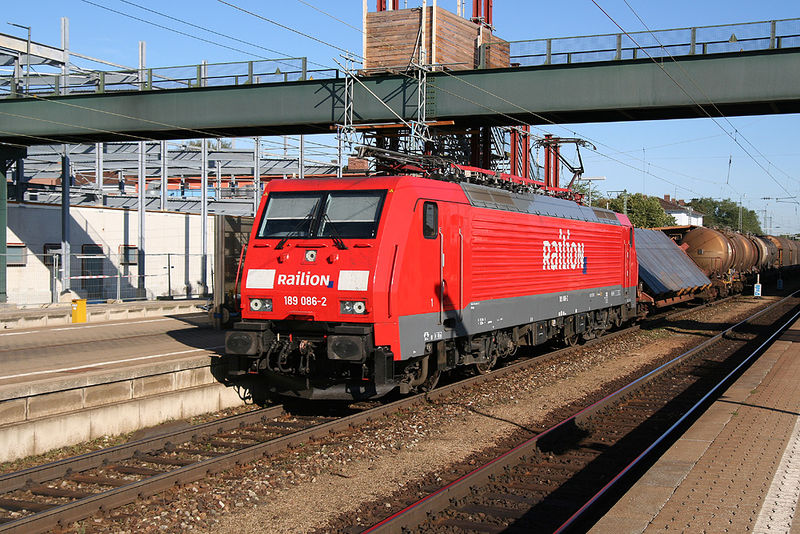
10. Siemens EuroSprinter/EuroRunner (diesel variant). This piece of equipment is actually coming to our shores soon, as the Amtrak Cities Sprinter, but it has been in use as mainline freight and passenger equipment in practically every other country with standard gauge for decades now, and in fact is being phased out by Siemens in favor of a new product, the Vectron. In this case, the EuroSprinter represents not so much a single unit as a class of unit types, namely Europe's general-use diesels and electrics, such as Bombardier's TRAXX, Alstom's Prima, Vossloh's Euro, Voith's Maxima, EMD's Series 66, and Škoda's 109E, among others.
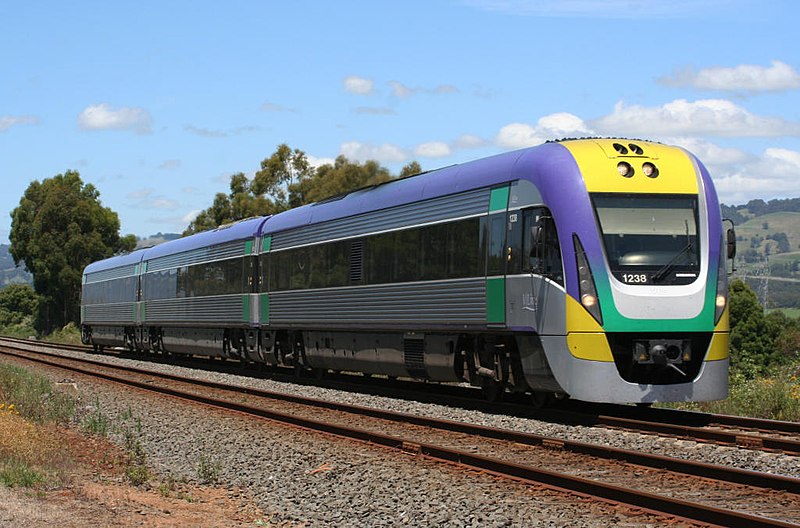
9. Bombardier VLocity 160. Victoria, Australia's, standard DMU. These trains operate a regional level in much the same fashion as the MPE-coach push-pull sets now standard in the U.S., but are far lighter and faster. Other than their rail gauge problem, Australian operating conditions are very similar to American ones--far more than Europe's--and as such Australian best practices and equipment may be American models--such as CountryLink's Xplorer or TransAdelaide's 3000 Class.
8. British Rail Mark III Coach. The coach of the British rail fleet. Its tough and highly durable monocoque design, combined with its double suspension, combine to make the coach exceedingly safe and comfortable. Too bad repressive FRA regulations prevent such an elegant design from being used on American rails, in favor of heavier, inferior designs. It also goes well with the Class 43 (see below), and is also the basis of a bunch of MU designs.
7. CGL Rail C44aci. Australia's most modern freight locomotive. Equipment like this regularly mixes with equipment such as the Vlocity mentioned above, and, like American equipment, is designed primarily for (a) coal unit trains and (b) intermodal service. American-built locomotives, or locomotives built with American components, in fact have a long history in Australia; this is essentially a GE Dash 9-44CW on a more lightweight frame. Similar equipment includes the older 90, AN, EL, and NR classes, and the competition includes Downer EDI Rail's GT46C ACe--essentially an EMD SD70ACe on a more lightweight frame. (This, by the way, proves that even mainline American freight equipment is absurdly heavy.)
6. Alstom Pendolino. The standard European tilting-train EMU. Originally developed by Fiat, these trains are designed for high-speed operation on legacy track: they are, in other words, ideal for the Northeast Corridor, far more than the all-too-slow and not-really-tilting Acela. The New Pendolino is the most recent variant and is also in use in China, a country whose freight network, like Australia's, emulates American conditions.
5. Stadler GTW/FLIRT. Common European DMUs and EMUs. Despite their surprisingly common application in the U.S. (the River Line is one such example), these units are not FRA-compliant and are thus treated as light rail, despite their all-around utility elsewhere. Similar equipment includes Siemens' Desiro, Bombardier's AGC, Alstom's SNCF Class Z 26500, and Nederlandse Spoorwegen's VIRM.
4. British Rail Class 43. The oldest unit on this list, it's here because of one major reason: the fastest way to bring express passenger trains to the U.S. is simply to purchase express passenger trains that were designed for high-speed service on legacy unelectrified lines. Therefore, simply making these trains street legal and acquiring them as the (proposed) Super Express enters service would massively--and rapidly--improve American rail passenger service. And create demand for a domestic version, too. Heck, Australia did the same thing (pictured above). Caveat: Class 43s are designed to operate in conjunction with Mark III coaches (see above)--or Aussie-style Budds--or possibly with a Class 91 and/or a driving van trailer.
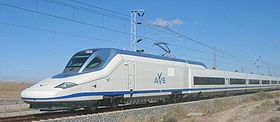
3. Talgo 350. Spain's native high-speed equipment, and one of the premier loco-hauled high-speed trainsets in the world (Talgo's Pendular system pre-empts distributed-power equipment). If the U.S. is ever to get a proper passenger service and passenger hierarchy, equipment such as this, Alstom's TGV Réseau, AnsaldoBreda's ETR 500, SJ's X2, or Rotem's KTX-II, would need to be allowable wherever service and merit demanded.
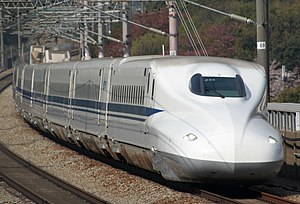
2. N700 Shinkansen. The only Japanese model on this list--and for good reason (bullet trains are Japan's only standard gauge trains)--the N700 is also built by all four of Japan's major rail builders (Kawasaki, Hitachi, Kinki Sharyo, and Nippon Sharyo) and is also the only Shinkansen model that has been exported (to China and Taiwan, respectively). Similar to this is Hitachi's Super Express program over in Britain, another model that needs to be street legal in the U.S. from Day 1.
1. Siemens Velaro. The high-speed rail gold standard, and has been for a decade now. The pioneer in distributed-traction trainsets, and still the fastest train in Europe, the Velaro represents a generational leap forward in European high-speed technology. Only now, with the Zefiro and AGV, are Bombardier and Alstom catching up with Siemens; Italian AnsaldoBreda and Spanish CAF now offer the less expensive V250 and HT65000; and Rotem and Talgo are busy at work creating the KTX-III and AVRIL. This is the forefront of global high-speed rail, and will be, short of another breakthrough being made.

These ten pieces of equipment (and their competition and derivatives) need to be made street legal in the U.S. forthwith. For freight equipment, it's a matter of maintenance: lighter locomotives that can develop the same kind of power are easier on the rails and can allow for faster train speeds, improving the industry's competitiveness (and the Aussie examples prove it can be done); and for passenger equipment, a matter of usefulness and accessibility. Better, lighter, faster, safer trains and operations would help make our laggard mass transit world-class once again, especially as things like the Hubbert peak theory work their magic and nonrenewable resources cease to be affordable.

We need to see this kind of equipment operational in the U.S. We need to see modern signaling such as ERTMS in the U.S. And we need to see rail geometries at modern standards in the U.S. How can we say we're the best at anything involving trains anymore? Our freight trains are long and slow, and passenger trains heavy and slow. Our rail system is a laughingstock! We need to get rid of the current asinine governmental railroad regulation in favor of something leaner, more international, and more in tune with the UIC.

A Picture Is Worth a Thousand Words

How things should be done. In this image, the Indian Pacific, Australia's premier transcontinental train, using engines and equipment very similar to American norms, passes a Transperth service. Because of Australia's ongoing gauge issues, Western Australia's rail network is dominantly the narrower Cape gauge, while the national network utilizes standard gauge. On either gauge, however, equipment and operating practices are similar to Chinese or American counterparts: those two Indian Pacific locos are essentially GE AC4400CWs in a different bodyshell.

In this image, heavy and light trains are operating safely alongside one another, on the same tracks. That FRA regulations prevent this--speaks volumes about the FRA.

Thursday, July 21, 2011

Death of a Retailer

The bankrupt bookstore, Borders, announced a couple of days ago that it will liquidate its remaining assets, after a deal with the Najafi Companies fell through. Borders was the second-largest bookstore chain in the U.S., after Barnes & Noble, with a presence in most of our larger cities and urban areas. (The third largest, Books-A-Million, is a long way behind, with locations primarily in the Southeast and a brand that lacks, um, gravitas.)

A lot of people, me included, grew up browsing the local library, Borders, and Barnes & Noble, picking something off the shelf that looked interesting, and learning about topics as disparate as high literature, philosophy, and cosmology. More so than any other bookstore, Borders was a place where you could just plop down and read and sometimes even doze. While that might have been a problem, in terms of business-model sustainability, it certainly made Borders feel like the center of a community--a private but publicly available information repository.

I grew up with Borders. My mom worked next to one, so whenever I had to wait for her I waited there. Whenever I found myself having to wait in Center City, I waited at the Borders at Broad and Chestnut. Most of the books I bought, I bought from Borders. They were always my favorite bookstore--the first one opening up in my area had been a revelation. I've never really felt at home in Barnes & Noble's stacks; I'll miss Borders.

So what's next? A big push by Books-A-Million? The company is far too small to compete with B&N--and even then B&N hasn't been having a good year? What about Amazon deciding to maintain a physical presence alongside a Web presence? (Its market is the descendant of mail-order, after all, and it would be following in the footsteps of brands such as Sears and Montgomery Ward.) American expansion by the Canadian chains Indigo and Chapters? (Kobo, because of Borders, certainly has some American presence.) Or of European and Oceanic firms, such as Waterstone's, W.H. Smith, fnac, Weltbild, Angus & Robertson, or some other established chain? Or a contraction of the publication industry in general? (I hope it's not that, I want people to read.) But there's the rub--despite the doom-and-gloom claims that Borders went bankrupt because its core business model wasn't sustainable (especially in wake of Amazon), the fact that so many other companies are successful in their fields, coupled with bad business decisions Borders made (most especially its early-2000s partnership with Amazon, which really served to poach Borders' customers), and the destabilizing effect of the recession, was more what brought the store down. The need to browse is human, and these big chain bookstores are consequently always stuffed with browsers. Browsing leads to impulse purchases: this creates a market bricks-and-mortar retailers can capitalize on that mail-order catalogs Internet retailers can't. This is why firms such as Sears and Ward's made the leap from the catalog to the showroom and physical store--and why the physical store will never die: because the psychology of the shopper changes subtly from the catalog (or website) to the physical store: the site feels more like a wish list ("what if?") while the store feels more concrete, more there, and easier to think about getting. Impulse purchases on Amazon are unlikely; at Barnes & Noble, they're a certainty.

Monday, July 18, 2011

Zoning and Transportation

A common criticism of zoning is its often-asinine parking requirements. Why, for example, should every new rowhome on an urban block have to have space for a vehicle--which in practice always means a garage? This emotional question is one which commonly initiates zoning reforms--yet, by the end of the process, community input from organizations who are continually worried about their neighborhoods' parking conditions--how hard it is to find a spot--will always ask for the re-inclusion of those exact same parking requirements, thereby frustrating the goals of transit activists, conservationists, New Urbanist planners, and others trying to shift the transportation mode share away from cars and more towards more sustainable modes, such as walking, biking, and mass transit.

To that end, the bonusing system of highest-density zones in many cities involves cutting parking requirements when alternative transportation access is included. This often comes in the forms of bike parking and/or access to local mass transit stations and concourses. In initial rezoning, these bonuses are structured such that they can potentially eliminate parking requirements altogether; yet after the community review process they come out so mangled they barely reduce parking, and hence promote alternative mode shares, at all.

Cap'n Transit today suggests a new approach: creation of zoning mirrors that either (a) eliminate parking or (b) promotes transit, by requiring a direct contribution to the local mass transit agency of roughly the amount it costs to add a garage. The full set of mirrors he suggests increases the number of possible zones, however, which would undermine another goal of zoning reform--reducing the number, and complexity, of zones to make the system more legible to both developers and community organizations.

When the use of mirrors is seen in light of this counter-demand, however, a new idea comes to mind: why not just rethink what we mean by parking requirements? For the provisioning of parking requirements is nothing more--and nothing less--than a policy meant to ensure transportation access to and from the site by the resident, patron, employee, whatever. It is thus intended to ensure economic access through the means of zoning. But the high autocentrism of the language--the way the requirements have been warped, either accidentally or deliberately--undercuts the aspiration behind providing this requirement in the first place. Parking requirements--instead of transportation access requirements--are an ossified remnant of the grand 1950s ideal that driving would be truly liberating.

The simpler way to offer what Cap'n Transit is suggesting is, thus, to simply offer a menu of different classes of transportation access instead of simply requiring parking. A developer could offer (a) parking to every unit or (b) a bike parking facility or (c) insurance of transit access via a grant to the local mass transportation agency to ensure a continuance of service, of roughly the per-unit cost of a garage or carport, or (d) a mix-and-match of the above options. Any options, by themselves, would be by right; mixing and matching would trigger a minor variance (to ensure that the percentages being allotted to each mode is in line with city mode-share desires). Transportation access requirements would then be built on the framework parking minimums offer, while superseding the detrimental effects, when scaled, those minimums create. It is also far simple to insert, and interpret, a transportation access table with different expectations and requirements pertaining to access of each mode at the beginning (or end) of the code, than it is to overstuff the code with reams of variant zones whose only purpose is to delineate different classes of transportation access.

Monday, July 11, 2011

Basics: Parking Requirements

Nearly every American zoning code takes minimum parking requirements for granted: every habitable structure has to have a minimum of so-and-so parking per unit (if residential) or square feet (if commercial or industrial). Yet this practice runs counter to international best practices. European cities, for example, are purposefully making themselves car-hostile. And changing thoughts on parking requirements are creating a patchwork in which some cities have parking minima and others parking maxima.

The major problem is that since 1950 American cities have seen auto access as a given; rather, its proper place is a luxury. Streets need to be there for service vehicles, but they don't need nearly as much space as they claim. (Japan, for example, proves that.) Automobiles are merely one mode out of many of transportation access--their usage is enforced when we create environments where there is no mass transit and other modes of personal transit (pedestrian, bike) are well-nigh suicidal, but their usage is also encouraged when we overbuild automotive infrastructure where there is great access via all other modes as well. European cities understand this. The idea of building an apartment building next to light rail, to take an example from the Times article, is reasonably urban (indeed, that is the root of transportation-oriented development), but by giving such a structure a massive parking deck for residents, you abrogate the development opportunities gained by being transit-oriented and instead merely make it transit-proximate. In an era where resources need to be shifted to better use less energy, providing a parking space per unit just doesn't make any sense.

TOD planning has helped bring about change--see places like Rosslyn, VA--but the reality is that with fewer resources we can put toward transportation better transportation planning is necessary. TOD is only an element in broader planning--and Philadelphia, and every city, for that matter, needs to start planning to ensure that every citizen has adequate transportation access to every mode, and an environment conducive to less energy-intensive modes of transportation and more gung-ho about more energy-intensive modes. In other words, the way we zone needs to make it easier to walk, ride a bike, or take the bus or train than drive.

To that end, along with the development and implementation of a 50-year transportation plan, such as Philadelphia2050, every metropolitan area in the U.S. needs to reconsider how it accommodates automobiles, through both roadway design and construction and planned transit access and network design--and through parking requirements. Parking minima should only be enacted in places where mass transit access in a 50-year timeframe is simply not a viable option, and zoning massing densities* complemented with a gradation of parking maxima relative to density, with the highest-density and closest-to-high-capacity-transit locales having no parking requirements whatsoever.** Ideally, this would be bundled with market-rate pricing of parking throughout the urban organism, such as what Market Urbanism suggests, and the complete-street/shared-space network I have previously described--a one-two punch that would effectively eliminate several hidden subsidies for cars in the urban cores and provide a long-term ridership base for mass transit and regional bike trails.
___________
* In either Euclidean or form-based frameworks.
** Philadelphia's new zoning code would have been trailblazing in enacting something not much different from this, but Center City neighborhood associations--particularly the perennial thorn-in-the-side LSNA--succeeded in having such progressive language removed from the bill, due to parking concerns. The idea that parking would be removed by removing cars from the road never seems to have been considered.

Monday, June 20, 2011

Connections

I went for a walk today. I'm a hardy pedestrian, I want to see the nice houses in East Falls up along Henry and Midvale, and since I've got a nasty sunburn across my shoulders my girlfriend doesn't want me to go swimming for a couple of days until it clears up, so I figure, why not?
This is the route I took. Extraneous arrows signify direction I was walking.
But I didn't have to go too far for things to start going wrong. Right off the bat, there is no sidewalk along Neill Dr. all the way down to the Falls Bridge. Now, this is an access road for West River MLK Jr. Drive, and it has no less than two major blind curves, and I was forced to cross at the corner of Falls Rd. and again between the Schuylkill Expressway and Norfolk Southern underpasses. The shoulder is in deteriorated condition, and shrubbery sometimes blocked the way, all the while as cars rocket past at 50 mph on a 25-signed road. To say this road is pedestrian-hostile is an understatement.
Typical conditions along Neill Dr.
East Falls is a mighty nice neighborhood, with classic Main Line building stock (where it departs from the Main Line: (1) It's accessed via former Reading lines, rather than Pennsy ones, and (2) it's in the city), but oddly it has some rougher-looking blocks near the foot of the hill, and the river side of the Ridge Avenue business district is grotesquely underbuilt. However, when I endeavored to get back across the river, this time via the City Line bridge, I found myself having to navigate a sidewalk ramp jammed in any old how between a wasp's nest of ramps connecting the auto traffic to even access the bridge--and then, once across the river, found myself having to bushwack thistles and poison sumac just to follow a sidewalk less than ten feet away from a major arterial and U.S. highway!

This. Is. Unacceptable.
Dangerous pedestrian conditions along City Line Ave. Believe it or not, there's a sidewalk under all that brush.
This lack of pedestrian interconnection between Wynnefield Heights and East Falls* effectively isolates the neighborhood from its cross-river neighbors, making it feel culturally more a part of uppermost West Philly (Wynnefield, Belmont Village) and the Lower Main Line (Cynwyd) than Northwest Philly, even though--with the proper densification strategy--it can sop up the demand for living close to Manayunk and East Falls destinations. While the large apartment structures in Wynnefield Heights are holding up well (I should know, I live in one), the smaller, traditionally owner-occupied, airlites in the neighborhood are starting to show signs of neglect. These Wynnefield Heights apartments are also incredibly convenient for St. Joe's students and moderately convenient for Temple students. They should also be incredibly convenient for Philly U. students, as the commute would be, quite literally, down the hill, over the bridge, back up the hill.

But they are not.

To get from City Line and Presidential, Wynnefield Heights' most transit-rich intersection, to Schoolhouse and Henry, Philly U.'s main entrance, requires a two-mile walk with a 200 ft. overall change in vertical elevation (down a hundred feet, and back up), or at least one transfer via bus (65-32, or 1-K and walk down Henry), despite the fact that Wynnefield Heights is equidistant between St. Joe's (54th and City) and Philly U. This, again, disconnects Wynnefield Heights from the northwest neighborhoods, and strengthens their connection with West Philadelphia, which is almost certainly part and parcel of the early signs of neighborhood deterioration visible in the airlites.

Solutions?
1. Mow the brush along the sidewalk along the City Line Bridge. Like, once every two weeks or so. The current conditions are deplorable overall and absolutely unacceptable for a key pedestrian linkage.
2. Extend a multi-use trail up the shoulders of Neill Dr. and Falls Road. Neill, in particular, sees high biking use despite its total lack of facilities, and would see more pedestrian use (the woods are pleasant) were there facilities. Borrowing one of its shoulders would be cheap and effective.
3. Extend the 38 from Wissahickon Transfer up Schoolhouse Ln. at least as far as Philly U., and preferably to either the Queen Lane or Chelten Avenue stops along the Chestnut Hill West line. Yes, the 38 is already a long route, but, well, the 23 is longer. This creates a more direct, one-stop public transit service from Wynnefield Heights to Philly U. and improves East Falls' own transit interconnections.

Longer-term solutions? Well, I think I want to spend a whole post on that, but suffice to say, current planning and service in the area is atrocious compared to what could be done. Why is there, for example, no easy pedestrian connection between Wynnefield Heights and Wissahickon Transfer? Or East Falls and same? For as important a transportation center as it is, Wissahickon Transfer feels kind of out in the middle of nowhere. Also: isn't there a better way of connecting the City Line Bridge to Ridge, Kelly, and Lincoln than that interchange-like knot? These are the questions better answered with a broader East Falls plan.
____________
* And--just ask anyone who's walked it--Manayunk and East Falls.

Wednesday, June 8, 2011

Tea Party Urban Planning Pt II

 Planetizen got wind of the California Tea Party group actively "engaged" in land-use planning. A few posts ago, I criticized the group's approach, and used this criticism to demonstrate my critique that the Tea Party is really just a bunch of hypocrites using a warped version of libertarianism as cover for retention of a faltering status quo.

The Tea Party isn't really libertarian in nature. The California group demonstrates this to a T: their primary focus is in preserving the "entitlements" they've grown used to...a large house with a large lawn and a car for each parent, each of their 2.3 children, and possibly their pet(s) too. There's nothing wrong* with this as a lifestyle choice, but to the Tea Partiers, it has been warped into a God-given right that every red-white-and-blue-bleeding American needs to have. What if otherwise reasonable people, like you or I, don't want it? Well, tough balls.

But you see, there's the rub. That's not choice. And without choice, you can't have freedom. "Freedom Is Slavery" is really a right and proper motto for these Tea Partiers, for a "freedom" without choice is a false freedom--a slavery. And that segues into the ultimate irony: this position is the antithesis of the libertarian ideology. That's right: the Tea Party is to libertarianism as al-Qaeda is to Sunni Islam, or televangelism to mainstream Christianity. It's a warped, perverted, obnoxious fringe view so secure in the dogmatization of its entitlements that it can't see there's another way of doing things, and one that may well be better in the long run.

By contrast, libertarianism really is about choice. If these Tea Partiers really were at all libertarian, no matter what their opinions on the planning effort may be, there's one thing they should unconditionally support: road privatization. But they don't, and they won't, because doing so exposes many of the hidden costs of suburban living currently just subsidized away. They don't want a balanced playing field, or real choice, or freedom: they just want to put blinders on and have things stay the way they are.

But the world is changing around them, and that ain't gonna happen.
_____________
* Well, other than the insane social, sociological, psychological, cultural, and ecological costs, of course.

Friday, May 27, 2011

FRA Is The Problem With American Railroading

I'd just like to permalink to Alon Levy's latest post. He hits the nail right on the head as regards American railroading and the woeful state of regulation this side of the Atlantic. In particular two passages stand out to me:
Under present FRA regulations, not much more than NEC service levels can be done: rolling stock would have to meet guidelines developed for the steam era, curve speeds would be limited, and the signaling would not provide enough capacity for adequate service levels on shared track. This is independent of the incompetence of every FRA-compliant railroad; in fact part of the incompetence is manifested in unwillingness to try to get waivers, even though Caltrain, a small operator, applied for a partial waiver and got it.
 and:
In contrast, no reform of the FRA is possible short of a complete overhaul. The appropriate passenger rail regulation in the US is that everything that’s legal in Japan or Europe is legal in the US, and the only local task should be a skeletal staff reconciling European and Japanese rules where necessary. A piecemeal approach leads to partial and suboptimal reforms, requiring additional testing of already extensively used trains.
Quoted for truth.