Showing posts with label Buy America. Show all posts

Wednesday, February 5, 2014

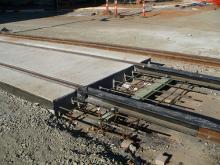
No Girder Rail Is Made In America Whatsoever

Yep, this is a problem for light-rail and especially streetcar projects.

(Girder rail is the best kind of rail for street running.)

In fact, there's only one producer of it in the world--in Austria.

But look on the bright side: Build enough streetcar track and you can catalyze domestic girder rail orders.

But Buy America is a major block between A and B.

Oh look--protectionism run amok undermining the development of domestic industry. Again.

Thursday, October 20, 2011

Fixing the FRA

Although there are a handful of trolls who believe otherwise, the consensus opinion that the regulatory body of the Federal Railroad Administration is largely, if not wholly, broken and that, as such, a radical reformation of the body--such as from a regulatory body to a booster body, or perhaps a planning body--if not its outright elimination, is needed. This opinion is shared among people with substantive transportation expertise, from hobbyists and prospective entrants (e.g. moi) into the field, to practitioners, and on up to the very freight railroads the current FRA regulations are most forgiving to. The FRA question of a decade ago may have been does it work?, but now that the answer no, it does not has been widely agreed, the question has to become how to change it?, or, more brusquely, how to fix it?

The first problem in this question is how many people even know it is a problem, outside of the community that has to deal with it regularly? Not many. The FRA is one of several sub-silos in the highly disciplinary decadent U.S. Department of Transportation; it reports to the Secretary of Transportation and displays little cross-departmental communication with its kin, the Federal Transit Administration (FTA) and Federal Highway Administration (FHWA)*. As such, it is part of the Cabinet and thus the Presidency. But compared to the EPA, which is a huge fish, and constantly bounding across the line of what constitutes 'good' and 'bad' regulation, it is insignificant unto nothing. Very few people would even realize that stripping the FRA of its regulatory power would have done something. But since the body politic the FRA puts into practice is, compared to peer agencies, such as the relevant agency in Australia (whatever it is), or the international standard of the UIC, which governs everything from the light, speedy trains of Western Europe and Japan to the massive and heavy trains of Russia and China, archaic at best and plain old atavistic at worst, the FRA is a major impediment to badly-needed change in American railroads--both in the arenas of passenger and freight.

Thus the first issue we have to deal with is outreach. And not just one type of outreach. The FRA is so broken for so many reasons--and appears to exist now merely to perpetuate itself rather than being in thrall to a corporate or labor interest--that a case for why the FRA should be stripped of its regulatory power, if not outright done away with can most likely be made to cater to every political ideology imaginable. Very few regulatory agencies get to be such total failures as to manage that. Let us now concentrate on some of the more general ones.

For Republicans. The vast majority of modern rail technology is developed overseas, in UIC-compliant situations. If you want to privatize passenger rail service, you'll need to ensure that the American rail regulatory body is equipped to handle the maximal amount of rail technologies current available. As it stands, the FRA's sacred cows guarantee it can only handle a relatively minimal amount, and little--if not none--of which can be readily used for profitable private passenger rail. To pursue a viable privatization agenda, thus, the regulatory power of the FRA must be stripped. (This should be particularly effective on Mica.)
For Democrats. Regulation needs to be revisited from time to time to test its effectiveness. Ineffective regulation is detrimental to the needs of a country as a whole (just as a lack of regulation in situations where safety is legitimately needed). By this standard, our railroad safety regulation is outdated and ineffective. The U.S. has the worst--by a long shot--per capita railroad crash fatality rate in the developed world, despite a regulatory agenda supposedly engineered to ensure safety. Furthermore, the entire field of railroad technology in the U.S. is relatively outdated and falling behind, with offerings by Bombardier, Alstom, Siemens, and Kawasaki outstripping what even the GE GEVO is capable of, much less EMD. Passenger rail technology, as an industry in the U.S., is nonexistent: we have to import all real expertise in the field. It would appear that, in the direction the FRA is currently heading, passenger rail safety will be attained only by virtue of its nonexistence. Do we want that? Elimination of passenger rail would force all intercity transportation onto highways and through airports, which are already strained enough as it is. By contrast, the haunting ruins of an era when rail was the normative mode of intercity transportation lie all around us. Shuttered stations, grand stations ill used. Given where we expect our intercity transportation to go in the next few years, this is an entire infrastructure lay slack that can be picked up again--but again--our regulatory body ensures that this infrastructure lays slack, by forcing us to use obsolescent technology which has not been able to be profitably provided native to the U.S. for over a generation--since the end of the Budd Company. The only way to be able to pick up this slack, and bring fallow infrastructure back to active use--is to eliminate the bad regulation forcing its slackness. Worse, the FRA has gone rogue, refusing to listen or study any regulatory solutions used anywhere else in the world. Why should we trust a rogue organization with vital safety regulation? Bring the FRA under heel, strip it of its current policy, and impose a UIC-compliant regulatory standard so that we can have equipment as up-to-date and as safe as the rest of the developed world enjoys.

This two cases are fundamentally different, and resonate different strands, but outreach campaigns to both parties would ideally allow the vast majority--if not entirety--of the House and Senate transportation committees to come to common conclusion and common cause--namely, the stripping of FRA regulatory powers and their replacement with UIC-compliant regulation.

The question now becomes how to make the most powerful special interest impacted by the FRA--the Association of American Railroads, or AAR--interested in implementing UIC regulation; the AAR's members (that is, the major American Class I and Class II freight railroads) would need to restructure equipment standards for this new regulation--although, as the Russian and Chinese examples show, UIC regulations do also cover heavier-standard networks in addition to lighter ones. The Australian mean as an implementation midphase may be the best way to go about things.
_____________
*Not that the FRA has that much reason to talk to the FHWA. But the FTA, especially, whose purview overlaps with the two others, should be the "glue" binding all three. That they don't is clear evidence of a highly disciplinary decadent corporate culture.

Wednesday, August 31, 2011

Ten Pieces of Train Equipment That Need to Be Street Legal In America

...Metaphorically speaking, to a certain degree, of course. But this short list includes a couple of locos, coaches, EMUs, and DMUs, none of which are currently allowed to mix with American mainline freight traffic. Given this equipment's global ubiquity, this points to a failure of the American regulatory body rather than a lack of safety inherent in the equipment.
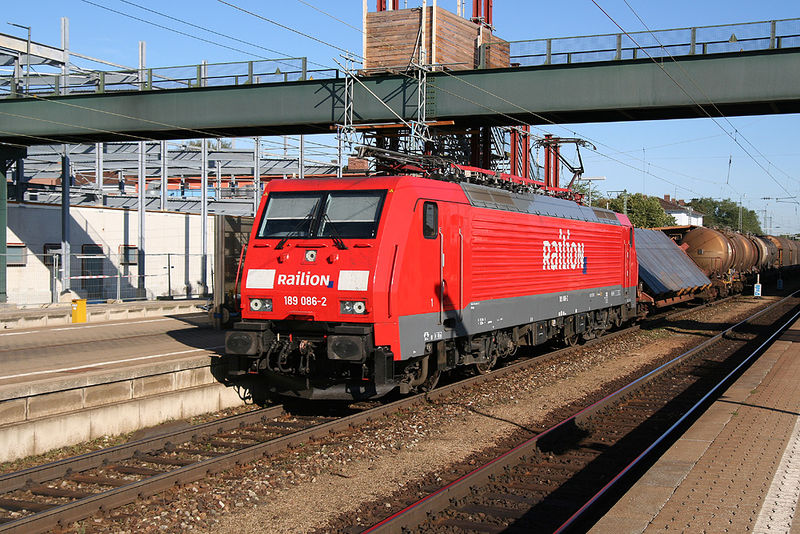
10. Siemens EuroSprinter/EuroRunner (diesel variant). This piece of equipment is actually coming to our shores soon, as the Amtrak Cities Sprinter, but it has been in use as mainline freight and passenger equipment in practically every other country with standard gauge for decades now, and in fact is being phased out by Siemens in favor of a new product, the Vectron. In this case, the EuroSprinter represents not so much a single unit as a class of unit types, namely Europe's general-use diesels and electrics, such as Bombardier's TRAXX, Alstom's Prima, Vossloh's Euro, Voith's Maxima, EMD's Series 66, and Škoda's 109E, among others.
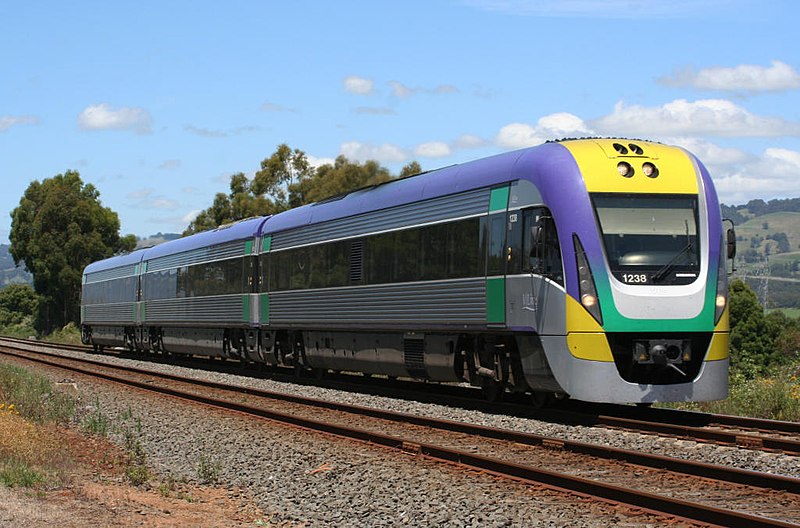
9. Bombardier VLocity 160. Victoria, Australia's, standard DMU. These trains operate a regional level in much the same fashion as the MPE-coach push-pull sets now standard in the U.S., but are far lighter and faster. Other than their rail gauge problem, Australian operating conditions are very similar to American ones--far more than Europe's--and as such Australian best practices and equipment may be American models--such as CountryLink's Xplorer or TransAdelaide's 3000 Class.
8. British Rail Mark III Coach. The coach of the British rail fleet. Its tough and highly durable monocoque design, combined with its double suspension, combine to make the coach exceedingly safe and comfortable. Too bad repressive FRA regulations prevent such an elegant design from being used on American rails, in favor of heavier, inferior designs. It also goes well with the Class 43 (see below), and is also the basis of a bunch of MU designs.
7. CGL Rail C44aci. Australia's most modern freight locomotive. Equipment like this regularly mixes with equipment such as the Vlocity mentioned above, and, like American equipment, is designed primarily for (a) coal unit trains and (b) intermodal service. American-built locomotives, or locomotives built with American components, in fact have a long history in Australia; this is essentially a GE Dash 9-44CW on a more lightweight frame. Similar equipment includes the older 90, AN, EL, and NR classes, and the competition includes Downer EDI Rail's GT46C ACe--essentially an EMD SD70ACe on a more lightweight frame. (This, by the way, proves that even mainline American freight equipment is absurdly heavy.)
6. Alstom Pendolino. The standard European tilting-train EMU. Originally developed by Fiat, these trains are designed for high-speed operation on legacy track: they are, in other words, ideal for the Northeast Corridor, far more than the all-too-slow and not-really-tilting Acela. The New Pendolino is the most recent variant and is also in use in China, a country whose freight network, like Australia's, emulates American conditions.
5. Stadler GTW/FLIRT. Common European DMUs and EMUs. Despite their surprisingly common application in the U.S. (the River Line is one such example), these units are not FRA-compliant and are thus treated as light rail, despite their all-around utility elsewhere. Similar equipment includes Siemens' Desiro, Bombardier's AGC, Alstom's SNCF Class Z 26500, and Nederlandse Spoorwegen's VIRM.
4. British Rail Class 43. The oldest unit on this list, it's here because of one major reason: the fastest way to bring express passenger trains to the U.S. is simply to purchase express passenger trains that were designed for high-speed service on legacy unelectrified lines. Therefore, simply making these trains street legal and acquiring them as the (proposed) Super Express enters service would massively--and rapidly--improve American rail passenger service. And create demand for a domestic version, too. Heck, Australia did the same thing (pictured above). Caveat: Class 43s are designed to operate in conjunction with Mark III coaches (see above)--or Aussie-style Budds--or possibly with a Class 91 and/or a driving van trailer.
3. Talgo 350. Spain's native high-speed equipment, and one of the premier loco-hauled high-speed trainsets in the world (Talgo's Pendular system pre-empts distributed-power equipment). If the U.S. is ever to get a proper passenger service and passenger hierarchy, equipment such as this, Alstom's TGV Réseau, AnsaldoBreda's ETR 500, SJ's X2, or Rotem's KTX-II, would need to be allowable wherever service and merit demanded.
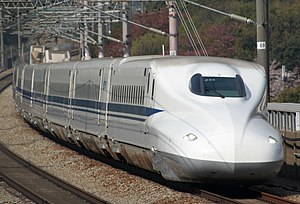
2. N700 Shinkansen. The only Japanese model on this list--and for good reason (bullet trains are Japan's only standard gauge trains)--the N700 is also built by all four of Japan's major rail builders (Kawasaki, Hitachi, Kinki Sharyo, and Nippon Sharyo) and is also the only Shinkansen model that has been exported (to China and Taiwan, respectively). Similar to this is Hitachi's Super Express program over in Britain, another model that needs to be street legal in the U.S. from Day 1.
1. Siemens Velaro. The high-speed rail gold standard, and has been for a decade now. The pioneer in distributed-traction trainsets, and still the fastest train in Europe, the Velaro represents a generational leap forward in European high-speed technology. Only now, with the Zefiro and AGV, are Bombardier and Alstom catching up with Siemens; Italian AnsaldoBreda and Spanish CAF now offer the less expensive V250 and HT65000; and Rotem and Talgo are busy at work creating the KTX-III and AVRIL. This is the forefront of global high-speed rail, and will be, short of another breakthrough being made.

These ten pieces of equipment (and their competition and derivatives) need to be made street legal in the U.S. forthwith. For freight equipment, it's a matter of maintenance: lighter locomotives that can develop the same kind of power are easier on the rails and can allow for faster train speeds, improving the industry's competitiveness (and the Aussie examples prove it can be done); and for passenger equipment, a matter of usefulness and accessibility. Better, lighter, faster, safer trains and operations would help make our laggard mass transit world-class once again, especially as things like the Hubbert peak theory work their magic and nonrenewable resources cease to be affordable.

We need to see this kind of equipment operational in the U.S. We need to see modern signaling such as ERTMS in the U.S. And we need to see rail geometries at modern standards in the U.S. How can we say we're the best at anything involving trains anymore? Our freight trains are long and slow, and passenger trains heavy and slow. Our rail system is a laughingstock! We need to get rid of the current asinine governmental railroad regulation in favor of something leaner, more international, and more in tune with the UIC.

Friday, May 27, 2011

FRA Is The Problem With American Railroading

I'd just like to permalink to Alon Levy's latest post. He hits the nail right on the head as regards American railroading and the woeful state of regulation this side of the Atlantic. In particular two passages stand out to me:
Under present FRA regulations, not much more than NEC service levels can be done: rolling stock would have to meet guidelines developed for the steam era, curve speeds would be limited, and the signaling would not provide enough capacity for adequate service levels on shared track. This is independent of the incompetence of every FRA-compliant railroad; in fact part of the incompetence is manifested in unwillingness to try to get waivers, even though Caltrain, a small operator, applied for a partial waiver and got it.
 and:
In contrast, no reform of the FRA is possible short of a complete overhaul. The appropriate passenger rail regulation in the US is that everything that’s legal in Japan or Europe is legal in the US, and the only local task should be a skeletal staff reconciling European and Japanese rules where necessary. A piecemeal approach leads to partial and suboptimal reforms, requiring additional testing of already extensively used trains.
Quoted for truth.