Note: This post originally appeared Friday.
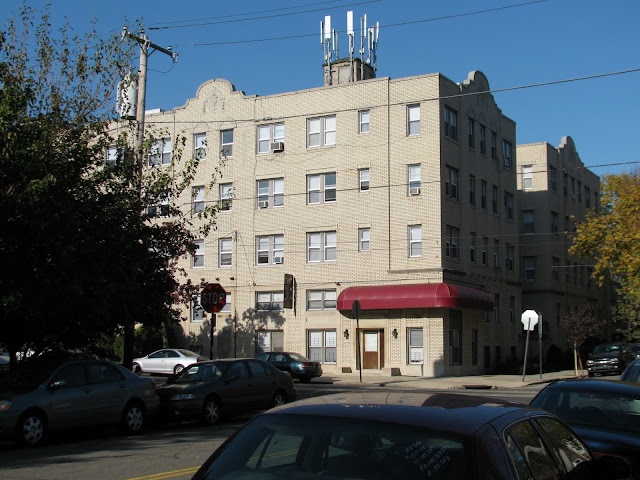
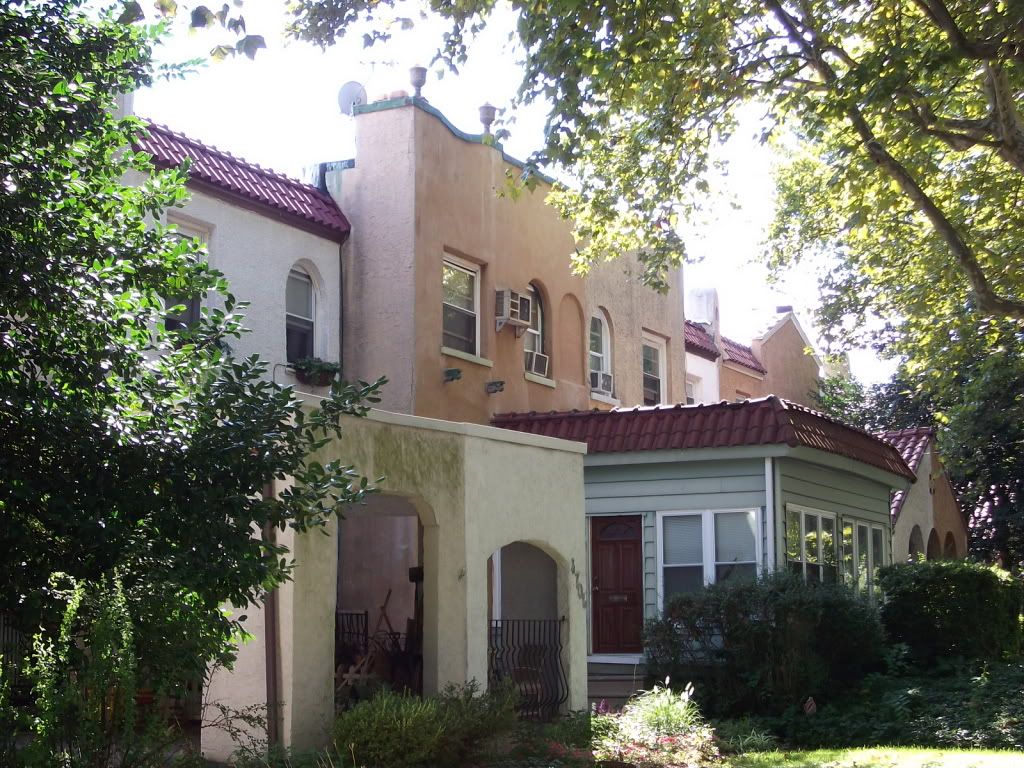
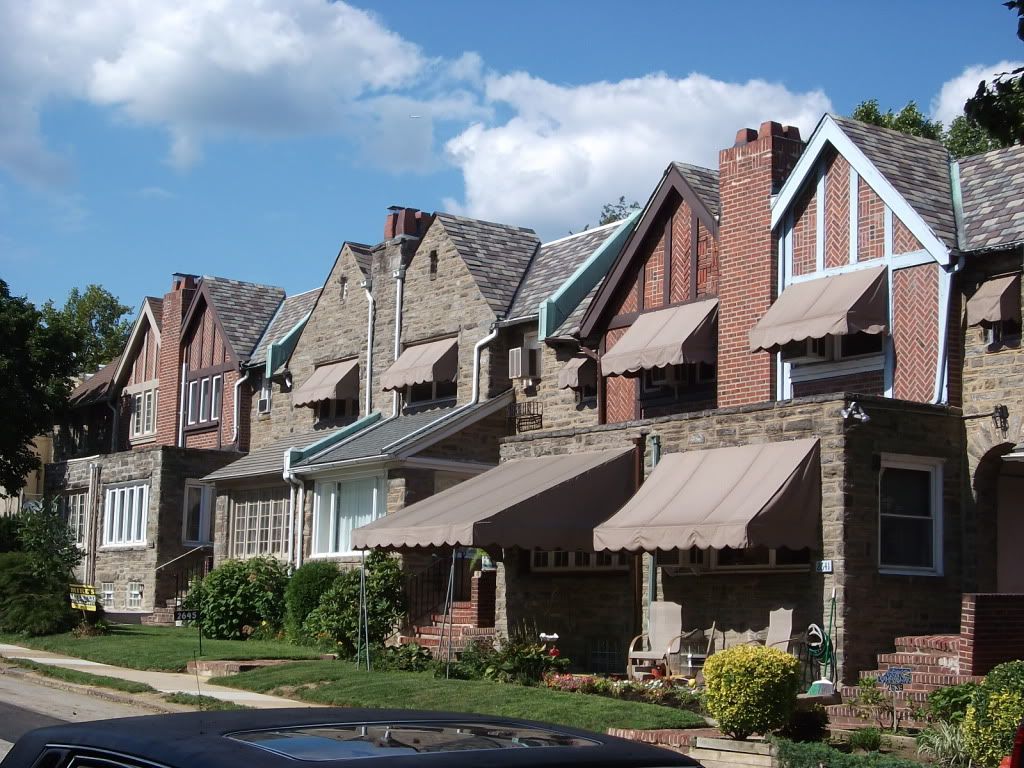
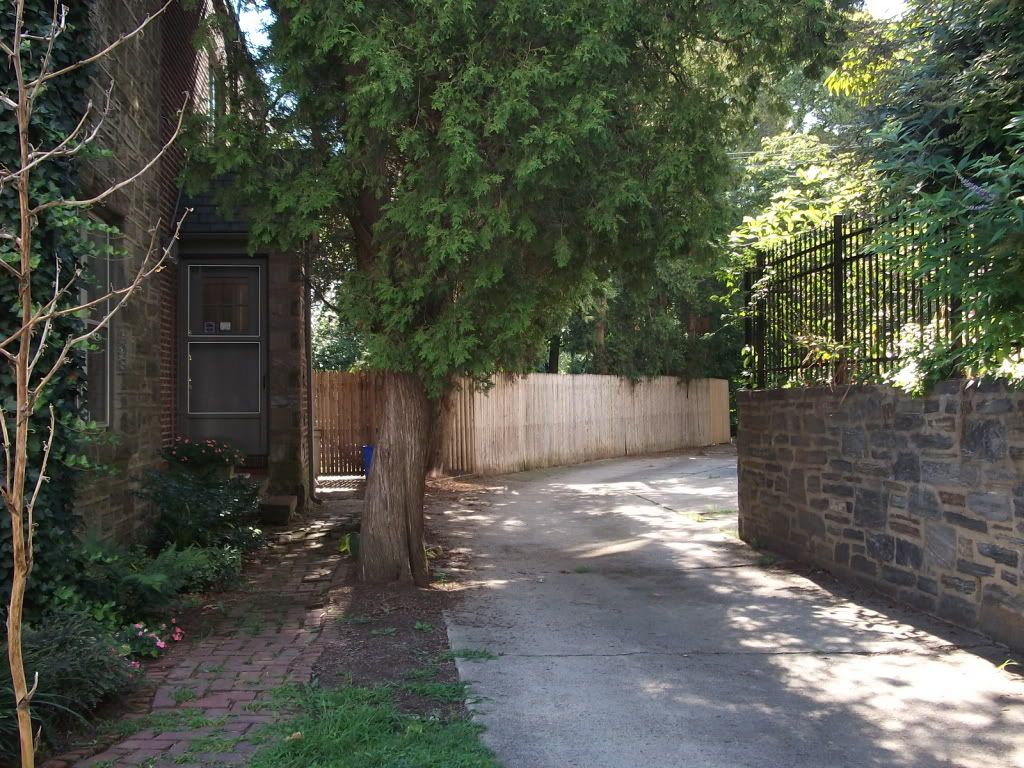
The deepest part of South Philadelphia, south of the Schuylkill Expressway, is full of surprises. An Olmsted park graces the corner of Broad and Pattison–as does the NovaCare Center. The most most of us ever see of this area is the Sports Complex, or, if we work there, the Navy Yard.
But behind the Navy Yard lies a swath of (mostly) post-war residential development that reflects the changing perception of ... Continue reading at Hidden City Philadelphia.
Showing posts with label Neighborhood Mystique. Show all posts
Sunday, February 5, 2012
Friday, January 20, 2012
The Architecture of Wissahickon: Urban, Suburban, Midcentury, Victorian
The controversial Roxborough development proposal that caused quite a stir last week is at the edge of one of the city’s more remarkable neighborhoods. Staunchly middle-class, this neighborhood hangs tenaciously onto the slope between Ridge Avenue and the beginning of the Wissahickon Gorge, like a mining town halfway up a mountain.
It is also remarkable in that it has been continuously developed and filled out over the last century and a half, with a housing mix ranging all the way ... Continue reading at Hidden City Philadelphia.
Monday, January 16, 2012
Behind Victorians
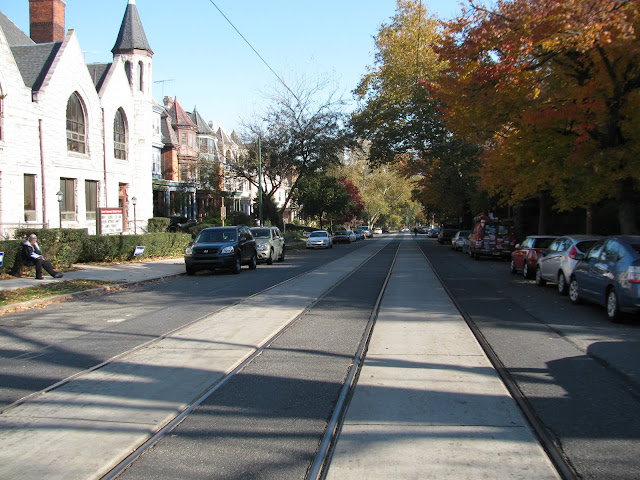
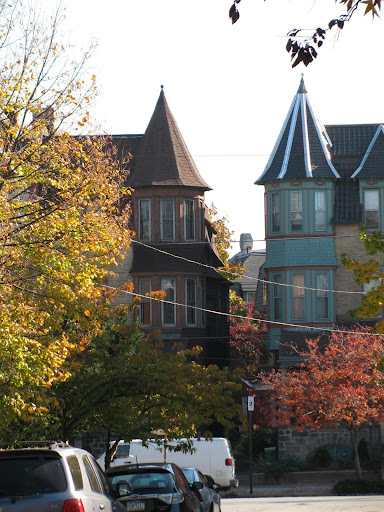
Parkside is at once one of the city’s most visible and most enigmatic neighborhoods. There are major regional attractions like the Mann Center and Please Touch Museum, the Japanese Tea Garden and Carousel House, and most especially the Zoo. Parkside and Belmont Avenues are critical commuter links into the city; thousands of cars pass by this neighborhood every day.
The part they pass by–the great row of Victorian mansions that feel like ... Continue reading at Hidden City Philadelphia.
Friday, December 23, 2011
Subdued Christmas in Center City
It’s Christmastime in Center City! And you would hardly know that from looking at the papers. The city’s best light shows this year, declared the Metro last week, are in Franklin Square, Chestnut Hill, and Lower Moyamensing (so spectacular it merited its own article).
But what about, y’know, Walnut Street? Or Market? Aren’t the best Christmas decorations in the city supposed to be in its commercial core? Shouldn’t they? After all, is there any better way to encourage people to buy something than to be festive about it?
So I took my camera, and I observed ... Continue reading at Hidden City Philadelphia.
But what about, y’know, Walnut Street? Or Market? Aren’t the best Christmas decorations in the city supposed to be in its commercial core? Shouldn’t they? After all, is there any better way to encourage people to buy something than to be festive about it?
So I took my camera, and I observed ... Continue reading at Hidden City Philadelphia.
Tuesday, November 15, 2011
University City, Or, How I Learned To Stop Worrying And Love Hypertrophism
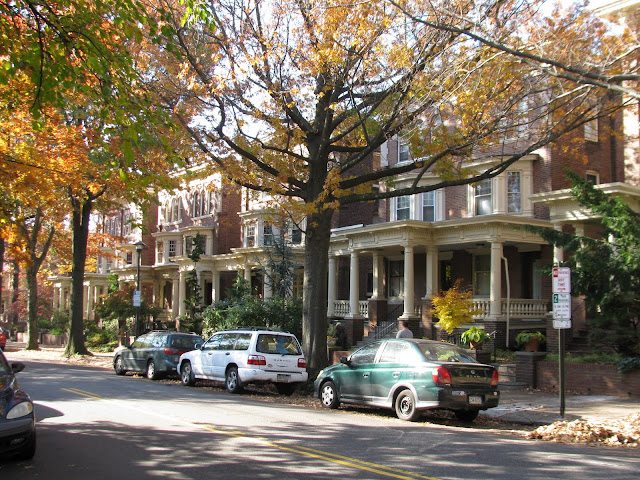
Philadelphia's core is filled with classic grid urbanism, in a tradition handed down from aeons past. It is replete with narrow and ultra-narrow streets marching along the north-south axis of a key avenue, Broad Street, as well as along the waterfront axis controlled by Kensington Avenue.
But travel a mile or so west, beyond the University of Pennsylvania, and the nature of urbanism becomes very different. Instead of the grid controlling for close-in and narrow streets, it controls for wide, formal avenues in a quasi-parklike setting. The buildings become Victorian confections, and the hypertrophism that develops remains wholly pleasant. It is a different way to build a neighborhood--the streetcar suburb--but by no means is it invalid. This is a good example of what I mean when I say there are multiple optimal human habitats; just as the traditional form is optimal for one type of urbanism, so too is this form optimal for another.
The real danger lies when regulations enforce one type of urbanism over all others. This constricts supply for other types of urbanism, and when the type favored by regulation becomes déclassé--as is happening today--supply constrictions force prices to skyrocket.
More photos here.
Why does University City succeed where later hypertrophism fails? Walking this neighborhood is like walking in a park! No wonder why neighborhoods such as this are so popular--there is a certain attraction to living in a park.
But travel a mile or so west, beyond the University of Pennsylvania, and the nature of urbanism becomes very different. Instead of the grid controlling for close-in and narrow streets, it controls for wide, formal avenues in a quasi-parklike setting. The buildings become Victorian confections, and the hypertrophism that develops remains wholly pleasant. It is a different way to build a neighborhood--the streetcar suburb--but by no means is it invalid. This is a good example of what I mean when I say there are multiple optimal human habitats; just as the traditional form is optimal for one type of urbanism, so too is this form optimal for another.
The real danger lies when regulations enforce one type of urbanism over all others. This constricts supply for other types of urbanism, and when the type favored by regulation becomes déclassé--as is happening today--supply constrictions force prices to skyrocket.
More photos here.
| Let's start on Kingsessing Avenue. The larger, more ornamented buildings are scaled to match the wider avenue. |
| A narrower street in University City...Lot line to lot line, this street is as wide as a normal grid street on the other side of the Schuylkill. |
| This 1920s apartment building reflects the kinds of neighborhood changes that brought about land use zoning codes in the first place. |
| Streetcar suburbia is urban suburbia. |
| A Southern influence can be seen throughout University City. |
| Sidewalks are comfortably wide, and sometimes even spacious. |
| This one-way stretch of 46th is a tad excessive. Almost every street here is two-way. |
| This stretch of (IIRC) Larchwood is typical of University City. Despite their hypertrophism, the avenues are still quite quiet. |
| These are some of my favorite houses in the city! They sell for half a mil a pop. |
| This Cedar Avenue streetscape is emblematic of University City as a whole. |
| Some stone a-fore; heftier density closer to the el pops up behind. |
| Many houses here are twins. These two have turrets buttressing and enforcing one another. The small paved side yards are especially enchanting. |
Tuesday, August 16, 2011
Neighborhood Mystique: Belmont Village
Neighborhood Mystique is a semi-regular series on unheralded yet handsome neighborhoods in Philadelphia.
Bounded by Belmont Avenue, City Line Avenue, and the Bala Country Club golf course, Belmont Heights is one of the City Line's smallest neighborhoods. Across from Bala-Cynwyd and close to Center City, this neighborhood has always been within easy walking or transit distance of the region's major shopping and jobs centers.
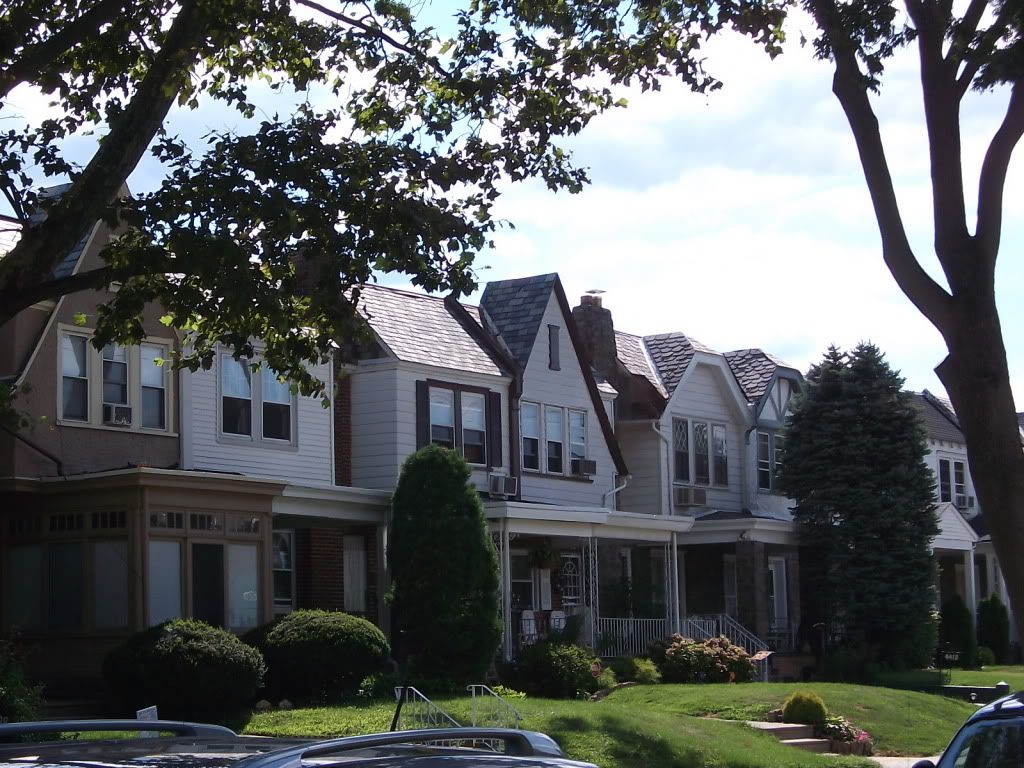
Built almost all in one go in the 1920s, Belmont Village's primary housing stock is the ubiquitous (for that time) airlite, primarily Tudor, although more Deco and Modernist looks creep in amongst newer airlites. Along Conshohocken Avenue, the Mission style, however, holds sway.
Larger apartment complexes abut interior Belmont Village's airlites along Belmont and City Line Avenues; shopping lies across the street and at the corner of Monument, Ford, and Conshohocken in nearby Wynnefield Heights. As with all City Line neighborhoods, however, the retail corridor is autocentric; redevelopment into something more pedestrian-friendly would go far in shoring this area up.
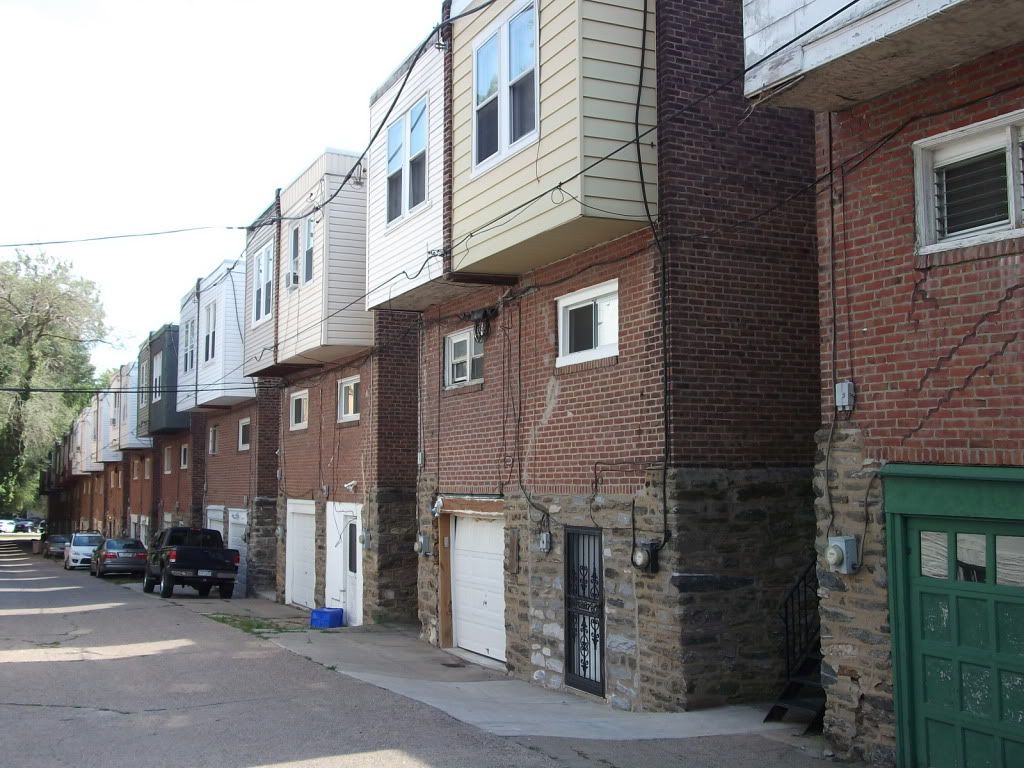
Historically, Belmont Heights is more an urban Main Line neighborhood than a suburban Philadelphia (County) neighborhood. The airlite pattern of development, like garden apartments, rose in the 1920s as a way to accommodate that new necessity, the automobile, and bring "light and air" into urban environments via the use of a deeply set-back front yard (which replaced rowhomes' rear yards) and garage-fronted alleys. It is a style that is being adapted in modern suburbia...poorly. This early attempt to accommodate the auto without having it take over a fundamentally pedestrian environment is light-years better than what we see today. As is the building quality.
Like Wynnefield, Belmont Village is today a mainly African-American middle-class enclave. Like all the City Line neighborhoods, however, there is a growing influx of young professionals moving in and maintaining stability, even as African-American populations continue to suburbanize.
![]() |
| Typical Belmont Village airlites |
![]() |
| Airlite rears. Notice alleyway and ground-floor garages |
![]() |
| Mission-style airlites along Conshohocken Avenue |
![]() |
| A more Colonial style of airlite |
![]() |
| An alleyway integrates into the local environment. Automotive, but not autocentric, space |
Thursday, August 4, 2011
Neighborhood Mystique: Wynnefield
This is a new series, called Neighborhood Mystique. Here I document some underappreciated neighborhoods in the city with excellent "bones". This is not about neighborhoods such as Northern Liberties or Manayunk; instead, this is about the neighborhoods that could be the next Northern Liberties or Manayunk.
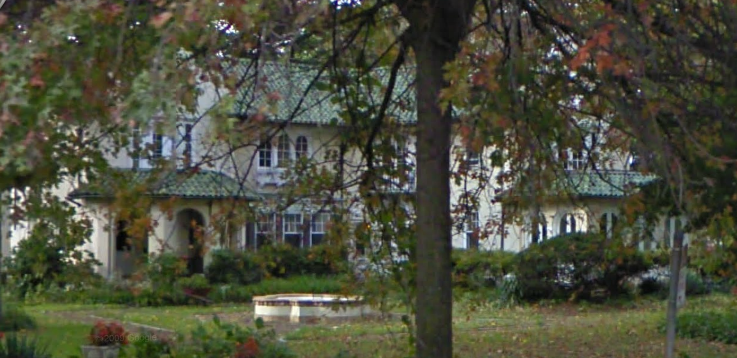
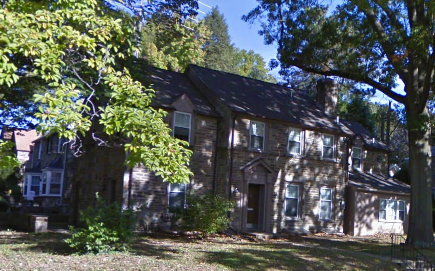
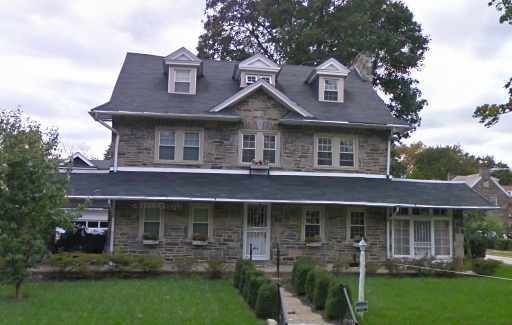
A true gem. Wynnefield is one of the two Philadelphia neighborhoods traditionally associated with City Line Ave. Developed primarily in two major phases, the bulk of the neighborhood is a late picturesque suburb built for Philadelphia's Jewish population, back when the major Jewish neighborhoods in the city extended around Fairmount Park's west side. Luxuriant mansions in various styles were built along Parkside Avenue, while a beautiful mélange of turn-of-the-century houses stretched back all the way to City Line Avenue.
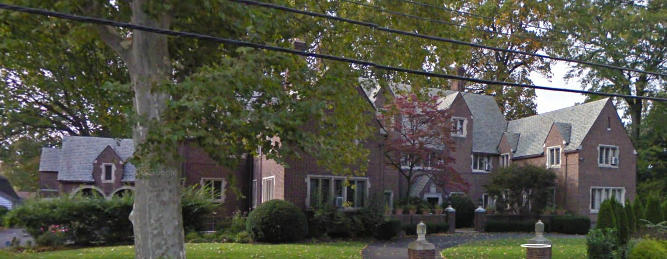
Later, in the 1920s, the less-desirable southern third of the neighborhood was developed as a series of Tudor airlites. However, as this was Wynnefield, a neighborhood that at the time was the most desirable Jewish neighborhood in the city, the quality that went into these airlites was far greater than in most other parts of the city. More houses keep getting added--all the way down to the present day--in the relatively few lots left after these two major phases of development.
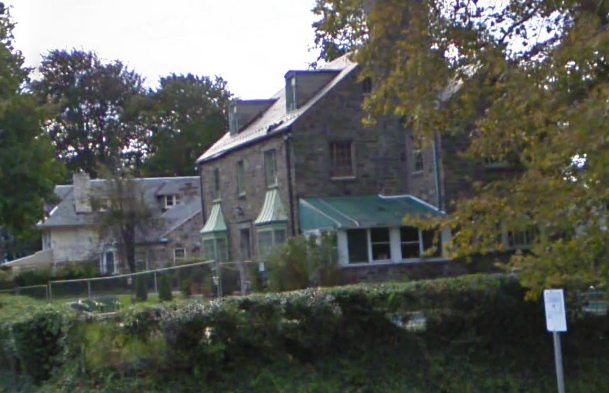
Its beauty, however, didn't stop it from changing, as the Jewish population left for more suburban neighborhoods during the 1950s. By 1960, Wynnefield had become a middle-class African-American neighborhood, and in the 1980s the crack epidemic hurt it hard. Even today, the more urban Tudor airlites of lower Wynnefield are home to a lot of drug problems, even though the earlier picturesque suburban areas have cleaned up and are once again a major bastion of African-American financial security.
Saint Joseph's University, Philadelphia's premier Jesuit college, stretches along City Line Avenue through Wynnefield, all the way from 52nd Street out past Overbrook Station. Its existence provides Wynnefield with its major economic anchor, and also with the neighborhood's most recent changes, as housing close to the college gets repurposed into student apartments for those who wish to live nearby--a change occurring in nearly every campus-proximate neighborhood in Philadelphia. These changes are starting to shift Wynnefield's demographics again, but the bedrock of wealth, whosoever owns it, in this neighborhood, isn't changing.
![]() |
| I, like, totally want to live in a house like this. |
![]() |
| And this house. Ooooooooh. |
![]() |
| Another beautiful picturesque estate |
![]() |
| A Colonial-style from upper Wynnefield |
![]() |
| Once upon a time this was what a suburb would look like |
Subscribe to:
Posts (Atom)